Difference between revisions of "The Ziratron"
From Circopedia
(→The End of Israel's First Circus) |
(→Image Gallery) |
||
| (38 intermediate revisions by the same user not shown) | |||
| Line 1: | Line 1: | ||
| + | [[File:Ziratron_Pin.png|right|300px]] | ||
==Israel's First Circus== | ==Israel's First Circus== | ||
| Line 4: | Line 5: | ||
| − | Although there is a long tradition of Jewish circus families and Jewish-owned circuses, especially in Northern and Eastern Europe, Israel, which has welcomed many Jewish circus performers among its population, doesn't have a circus of its own—although circus schools are beginning to appear, and it organized an international circus festival in 2015. However, there has been one genuine Israeli circus in existence for a | + | Although there is a long tradition of Jewish circus families and Jewish-owned circuses, especially in Northern and Eastern Europe, Israel, which has welcomed many Jewish circus performers among its population, doesn't have a circus of its own—although circus schools are beginning to appear, and it organized an international circus festival in 2015. However, there has been one genuine Israeli circus in existence for a little more than a decade after the State of Israel's creation in 1948. |
===The Ziratron=== | ===The Ziratron=== | ||
| − | Israel's very first circus, founded 1950, was named ''Ziratron'', which is a hybrid of two Hebrew words: "Zira" (an arena or manège) and "Te'atron" (theater). It was the brainchild of thirty-six discharged and disabled soldiers, who founded a cooperative and invested the hefty sum of 35,000 liras in the founding of the circus—most of it raised via loans from the Office for Rehabilitation of Veterans. In the beginning, the Administrative Director was Aron Berman, and the Artistic Director was Shlomo (Sam) Kalinhof. | + | [[File:Ziratron_Program_50-51.jpg|thumb|left|300pix|Ziratron Program cover (1950)]]Israel's very first circus, founded 1950, was named ''Ziratron'', which is a hybrid of two Hebrew words: "Zira" (an arena or manège) and "Te'atron" (theater). It was the brainchild of thirty-six discharged and disabled soldiers, who founded a cooperative and invested the hefty sum of 35,000 liras in the founding of the circus—most of it raised via loans from the Office for Rehabilitation of Veterans. In the beginning, the Administrative Director was Aron Berman, and the Artistic Director was Shlomo (Sam) Kalinhof. |
"We are professionals, and some of us have spent years working in some of Europe's most important circuses", explained the secretary of the cooperative, Lipi Hirsch, when interviewed for the newspaper ''Davar''. According to Hirsch, he and his friends made sure the circus is "100 percent" legit: "We have invited the very best—flying acrobats, clowns, bicycle acrobats, animal trainers, as well as a big orchestra to accompany the performances." The circus had its opening night on Tuesday, May 16th, 1950. | "We are professionals, and some of us have spent years working in some of Europe's most important circuses", explained the secretary of the cooperative, Lipi Hirsch, when interviewed for the newspaper ''Davar''. According to Hirsch, he and his friends made sure the circus is "100 percent" legit: "We have invited the very best—flying acrobats, clowns, bicycle acrobats, animal trainers, as well as a big orchestra to accompany the performances." The circus had its opening night on Tuesday, May 16th, 1950. | ||
| Line 16: | Line 17: | ||
They opened their circus on five dunams of land (approximately 4,500 square meters) in Ramat Gan, east of Tel Aviv, with the support of the municipality. They built what is known as a "construction," a round structure of wood covered with a canvas roof. There was a traditional circus ring, and the house could accommodate up to 2,500 spectators. People nicknamed it "The Canvas Colosseum". Beyond their Ramat Gan home, the Ziratron also had a permanent location for their shows in the city of Haifa. | They opened their circus on five dunams of land (approximately 4,500 square meters) in Ramat Gan, east of Tel Aviv, with the support of the municipality. They built what is known as a "construction," a round structure of wood covered with a canvas roof. There was a traditional circus ring, and the house could accommodate up to 2,500 spectators. People nicknamed it "The Canvas Colosseum". Beyond their Ramat Gan home, the Ziratron also had a permanent location for their shows in the city of Haifa. | ||
| − | The Ziratron staged mostly circus performances, showcasing "acrobatics, magic tricks, clowns, bicycle riders, dogs, horses, elephants, trained monkeys and many other elements of courage and speed accompanied by much humor". Later, trained wild animals were also incorporated. Their shows attracted thousands of spectators from all over the country and won raving reviews. | + | The Ziratron staged mostly circus performances, showcasing "acrobatics, magic tricks, clowns, bicycle riders, dogs, horses, elephants, trained monkeys and many other elements of courage and speed accompanied by much humor". Later, trained wild animals were also incorporated. Their shows attracted thousands of spectators from all over the country and won raving reviews. |
===Israeli Performers=== | ===Israeli Performers=== | ||
| − | Like all circuses, the Ziratron showcased an international cast of performers, but it had also a core of Israeli artists. Two of these | + | [[File:Muky and Alex.jpg|thumb|right|300px|Muky & Alex with friend (1951)]]Like all circuses, the Ziratron showcased an international cast of performers, but it had also a core of Israeli artists. Two of these artists were Zila and Charlie Klein. Born in Warsaw, Poland in 1927, Zila met Charlie when she was 18 years old; one year later, she married him and joined the circus with him. Charlie Klein was born in Hungary in 1907. He survived World War II by way of street performing, hiding his Jewish identity and traveling throughout Europe for a few years, until he managed to escape Europe for Israel. Charlie was a clown, stilt-walker and an acrobatic base. Zila was an acrobat, dancer and a skater, both on regular skates as well as ice skates. She performed at the circus until her daughter was born when she was thirty-one, at which point she retired. |
Another colorful character in the Ziratron was Zippora Zabbari (born 1908), a middle eastern dancer, trick roping artist and horse rider. Born in Israel she left for Prague when she was 21. Known there as "Miss Palestine," she dipped her toes in sawdust for the first time, picking up horse-riding and trick roping. Zippora later moved to Berlin where she further developed her circus skills. She performed these as a duo with her husband, a circus artist. Zippora escaped Germany for Israel on the eve of World War II. | Another colorful character in the Ziratron was Zippora Zabbari (born 1908), a middle eastern dancer, trick roping artist and horse rider. Born in Israel she left for Prague when she was 21. Known there as "Miss Palestine," she dipped her toes in sawdust for the first time, picking up horse-riding and trick roping. Zippora later moved to Berlin where she further developed her circus skills. She performed these as a duo with her husband, a circus artist. Zippora escaped Germany for Israel on the eve of World War II. | ||
| − | The Ziratron's beloved clowns were Muky | + | The Ziratron's beloved clowns were [[Muky and Alex]]—whose full stage names were Muky Mukyon & Alex Alizon (roughly translating to Muky Clown & Alex Cheerful). Alex (1919-1991) was born Akiva Rokenstein in Chernivtsi, Romania (today Ukraine) to a family of carpenters. From a young age he was funny and excelled at balancing tricks and was spotted by a professional clown from the Chernivtsi Circus who was so impressed by Alex that he invited him to become his assistant. |
Alex was only fifteen years old at the time, and he left his home to join the circus. Later he became a soldier in the Red Army and was captured during WWII and sent to a concentration camp in Transnistria. He survived the camp and, in 1945, came to Israel. There he met Muky (1889-1981), born Ya'akov Goldstein in Sofia, Bulgaria. He had been a professional clown all his life. In 1950 the Ziratron's director, Sam Kalinhof, introduced him to Alex. Muky was thirty years older than Alex, and much more experienced, and Alex became his student and stage partner. | Alex was only fifteen years old at the time, and he left his home to join the circus. Later he became a soldier in the Red Army and was captured during WWII and sent to a concentration camp in Transnistria. He survived the camp and, in 1945, came to Israel. There he met Muky (1889-1981), born Ya'akov Goldstein in Sofia, Bulgaria. He had been a professional clown all his life. In 1950 the Ziratron's director, Sam Kalinhof, introduced him to Alex. Muky was thirty years older than Alex, and much more experienced, and Alex became his student and stage partner. | ||
| − | When the Ziratron was created, Muky & Alex became its household clowns and performed in all its shows. They each had a well-defined character: Muky was a wise and funny clown, whereas Alex was a naive and serious clown, and it was "he who got slapped". Eventually they added a third clown to their team and worked as a trio with Charlie Klein on his stilts. | + | [[File:Ziratron_Program_(1954).jpg|thumb|left|400px|Program for the 1954 Season]]When the Ziratron was created, Muky & Alex became its household clowns and performed in all its shows. They each had a well-defined character: Muky was a wise and funny clown, whereas Alex was a naive and serious clown, and it was "he who got slapped". Eventually they added a third clown to their team and worked as a trio with Charlie Klein on his stilts. |
Avi Koren, an Israeli lyricist and translator, was just five years old when the Ziratron first opened. He and his friends used to sneak into the circus frequently, blending in with paying audience members. He left a description of his experience: "Inside the tent, which was boiling in the summer and leaking in the winter, we witnessed the whole wide world: Acrobats walking on tightrope, flaming torches in their hands, above them only a roof of canvas and beneath them only a net; dogs leaping through flaming hoops; monkeys sucking on baby bottles; dancing horses, bowing down to the instructions of the fairest of circus ladies... And once they had ridden out to the sound of the orchestra, bowing their heads towards the audience, in came Muky & Alex, 'The World's Funniest Clowns'… Muky & Alex—one hoarse and the other mute—would fall, tumble, flip, pour water on each other, and get tangled up in the net." | Avi Koren, an Israeli lyricist and translator, was just five years old when the Ziratron first opened. He and his friends used to sneak into the circus frequently, blending in with paying audience members. He left a description of his experience: "Inside the tent, which was boiling in the summer and leaking in the winter, we witnessed the whole wide world: Acrobats walking on tightrope, flaming torches in their hands, above them only a roof of canvas and beneath them only a net; dogs leaping through flaming hoops; monkeys sucking on baby bottles; dancing horses, bowing down to the instructions of the fairest of circus ladies... And once they had ridden out to the sound of the orchestra, bowing their heads towards the audience, in came Muky & Alex, 'The World's Funniest Clowns'… Muky & Alex—one hoarse and the other mute—would fall, tumble, flip, pour water on each other, and get tangled up in the net." | ||
| − | While the Ziratron was founded and managed by Israelis, most of its cast was international. Among many famous circus artists who performed during the 1951-1952 season were the beautiful and talented equestrienne [[Benji de La Cour]] (Benji and her husband [[Yves de La Cour]] were regulars of Paris's famous [[Cirque Medrano (Paris)|Cirque Medrano]]). There were also [[The Marconis]] (Pierre and Lucien Guillon) who had a spectacular aerial act, and the [[Trio Royal]], a Dutch jockey act composed of siblings Rita, Isabella and Bent Brunn, who performed under the watchful eye (and ''chambrière'') of their father, Joseph Brunn. | + | While the Ziratron was founded and managed by Israelis, most of its cast was international. Among many famous circus artists who performed during the 1951-1952 season were the beautiful and talented equestrienne [[Benji de La Cour]] (Benji and her husband [[Yves de La Cour]] were regulars of Paris's famous [[Cirque Medrano (Paris)|Cirque Medrano]]). There were also [[The Marconis]] (Pierre and Lucien Guillon) who had a spectacular aerial act, and the [[Trio Royal]], a Dutch jockey act composed of siblings Rita, Isabella and Bent Brunn, who performed under the watchful eye (and ''chambrière'') of their father, Joseph Brunn. |
===Change of Times=== | ===Change of Times=== | ||
| − | A big organizational change seems to have occurred in 1954: The company previously registered as "Ziratron Workers Cooperative, Ltd" has either been dissolved or rebranded, and had become "Ziratron Public Entertainments Company, Ltd". While the Ziratron continued to do business under the same name, the change was evident in the kind of entertainment they now produced: Starting in 1954 the Ziratron also hosted plays, boxing matches, musical concerts and more, as its popularity rose further. | + | [[File:Josephine_Baker_at_Ziratron.jpg|thumb|right|300px|Josephine Baker at The Ziratron (1954)]]A big organizational change seems to have occurred in 1954: The company previously registered as "Ziratron Workers Cooperative, Ltd" has either been dissolved or rebranded, and had become "Ziratron Public Entertainments Company, Ltd". While the Ziratron continued to do business under the same name, the change was evident in the kind of entertainment they now produced: Starting in 1954 the Ziratron also hosted plays, boxing matches, musical concerts and more, as its popularity rose further. |
A notable performance was that of the world-renowned black entertainer, French Resistance agent, and civil rights activist Josephine Baker in 1954. The American industry entertainment magazine ''Variety'' reported Ms. Baker's performance thus: "[The Ziratron's] attraction for the two weeks in December was Josephine Baker, who gave two performances daily to sellout audiences. Prices were 50c (for children) to $3. The government gets 40% of the intake. " | A notable performance was that of the world-renowned black entertainer, French Resistance agent, and civil rights activist Josephine Baker in 1954. The American industry entertainment magazine ''Variety'' reported Ms. Baker's performance thus: "[The Ziratron's] attraction for the two weeks in December was Josephine Baker, who gave two performances daily to sellout audiences. Prices were 50c (for children) to $3. The government gets 40% of the intake. " | ||
| Line 48: | Line 49: | ||
===A New Circus in Tel Aviv?=== | ===A New Circus in Tel Aviv?=== | ||
| − | In November 1958 the members of the Ziratron cooperative decided to build a permanent home for their circus in the neighboring (and much larger) city of Tel-Aviv. The land chosen for this purpose was then far away from the main areas of nightlife and entertainment; the building, envisioned to be a bona fide circus building, was designed by the award-winning architect Aharon Doron (1917-2012). | + | [[File:Polish_State_Circus_in_Israel.jpg|thumb|left|300px|Poster for the Polish State Circus (1960]]In November 1958 the members of the Ziratron cooperative decided to build a permanent home for their circus in the neighboring (and much larger) city of Tel-Aviv. The land chosen for this purpose was then far away from the main areas of nightlife and entertainment; the building, envisioned to be a bona fide circus building, was designed by the award-winning architect Aharon Doron (1917-2012). |
| − | Construction was supposed to last | + | |
| + | Construction was supposed to last three or four months, and in June 1959 the Ziratron began dismantling its Ramat Gan's ''construction'' with the intention of moving into the permanent Tel-Aviv building as soon as the work was completed. Alas, some disagreements, financial troubles and budget deficits soon halted the work on the circus building, and its skeleton was left deserted and unfinished. | ||
At that time the Ziratron was still supporting and rehabilitating wounded soldiers: A letter to the Israeli government dated March 10th, 1959 lists seven such men who were among the Ziratron's founders. Other records show that, during various times throughout the 1950s, the Ziratron supported thirty to seventy families of veteran, wounded, and discharged soldiers. | At that time the Ziratron was still supporting and rehabilitating wounded soldiers: A letter to the Israeli government dated March 10th, 1959 lists seven such men who were among the Ziratron's founders. Other records show that, during various times throughout the 1950s, the Ziratron supported thirty to seventy families of veteran, wounded, and discharged soldiers. | ||
| Line 61: | Line 63: | ||
===The End of Israel's First Circus=== | ===The End of Israel's First Circus=== | ||
| − | Over the following years, throughout the 1960s, Kikar Ha'Medina replaced the Ziratron tent as the main venue for visiting circuses, including [[Circus Medrano-Swoboda]] that came almost every year (brought to Israel by impresario Jakob Ori). In fact, there were so many circuses performing at Kikar Ha'Medina that it led to a popular saying: "The State of Israel is like the State Square: half the time circus, half the time mud". | + | [[File:Program_Bulgarian_State_Circus_1966.jpg|thumb|right|300px|Bulgarian State Circus program (1966)]]Over the following years, throughout the 1960s, Kikar Ha'Medina replaced the Ziratron tent as the main venue for visiting circuses, including [[Circus Medrano-Swoboda]] (later, [[Medrano-Casartelli]]) that came almost every year (brought to Israel by impresario Jakob Ori). In fact, there were so many circuses performing at Kikar Ha'Medina that it led to a popular saying: "The State of Israel is like the State Square: half the time circus, half the time mud". |
In 1964, five years after the construction of the Ziratron's Tel Aviv building had halted, its remaining skeleton was purchased by Israeli businessman Joseph Epstein and used for the construction of the "Cinerama" hall, where many films, concerts and other events were hosted for decades (the building was eventually demolished in 2016). In the beginning, there was some hope that the building could be used for Ziratron circus shows. But that hope never seemed to have come true. | In 1964, five years after the construction of the Ziratron's Tel Aviv building had halted, its remaining skeleton was purchased by Israeli businessman Joseph Epstein and used for the construction of the "Cinerama" hall, where many films, concerts and other events were hosted for decades (the building was eventually demolished in 2016). In the beginning, there was some hope that the building could be used for Ziratron circus shows. But that hope never seemed to have come true. | ||
| − | To the unsuspecting viewer, it seemed that the Ziratron had died when its | + | To the unsuspecting viewer, it seemed that the Ziratron had died when its ''construction'' was dismantled in 1959 and was replaced by the foreign circuses visiting Kikar Ha'Medina throughout the 1960s. But that was just an appearance: It was in fact it was still "Ziratron Public Entertainments Company, Ltd." that imported these foreign circuses to perform at Kikar Ha'Medina, even though their venue in Ramat Gan was no more. Strangely, however, the company was no longer doing business as the Ziratron; that name had completely disappeared from both marketing and programs and had been replaced by the name of the man who presided over the company and was its first and last director: "Impresario A. Berman" (Aron Berman). |
In 1967, Joseph Epstein (owner of the Ziratron-Cinerama building) went bankrupt, and the Israeli courthouse ordered his companies to be dismantled and sold—among which the Ziratron-Cinerama building. The following year, in July 1968, "Ziratron Public Entertainments Company, Ltd." went up for auction. It remains unclear whether at the time of the auction the company was owned by Mr. Epstein or by the veteran's cooperative; state records show that Mr. Berman started his own company in June 1969. | In 1967, Joseph Epstein (owner of the Ziratron-Cinerama building) went bankrupt, and the Israeli courthouse ordered his companies to be dismantled and sold—among which the Ziratron-Cinerama building. The following year, in July 1968, "Ziratron Public Entertainments Company, Ltd." went up for auction. It remains unclear whether at the time of the auction the company was owned by Mr. Epstein or by the veteran's cooperative; state records show that Mr. Berman started his own company in June 1969. | ||
| Line 71: | Line 73: | ||
After many incarnations, thus came the end of the Ziratron. The cooperative founded by veterans in November 1949 that captivated so many audiences throughout the 1950s and 1960s ceased to exist. It paid its very last debt to the legal receiver in July 1973. | After many incarnations, thus came the end of the Ziratron. The cooperative founded by veterans in November 1949 that captivated so many audiences throughout the 1950s and 1960s ceased to exist. It paid its very last debt to the legal receiver in July 1973. | ||
| + | ==A Note on The Source== | ||
| + | |||
| + | '''''This article has been adapted from the original on ''The Escape Act'' website''''' ([http://www.theescapeactshow.com/blog/extra-israels-first-circus theescapeactshow.com]) | ||
| + | |||
| + | ==Image Gallery== | ||
| − | + | <Gallery> | |
| + | File:Ziratron_Program_50-51.jpg|Ziratron Progam - 1950-51 Season (1950) | ||
| + | File:Zippora_Zabbari.jpg|Zippora Zabbari (c.1950) | ||
| + | File:Muky_and_Alex.jpg|Muky & Alex with friend (1951) | ||
| + | File:Josephine_Baker_at_Ziratron.jpg|Josephine Baker at The Ziratron (1954) | ||
| + | File:Ziratron_Program_(1954).jpg|Ziratron program (1954) | ||
| + | File:Ziratron_Pin.png|Ziratron souvenir pin (c.1955) | ||
| + | File:The_Ziratron-Aerial_view.jpg|The Ziratron (1955) | ||
| + | File:Ziratron_crowd.jpg|The Ziratron (1955) | ||
| + | File:Polish_State_Circus_in_Israel.jpg|Polish State Circus Poster (1960) | ||
| + | File:Program_Bulgarian_State_Circus_1966.jpg|Bulgarian State Circus Program (1966) | ||
| + | File:Hungarian_State_Circus_poster_(1967).jpg|The Hungarian State Circus in Tel Aviv (1967) | ||
| + | </Gallery> | ||
[[Category:Circuses|Ziratron, The]][[Category:History|Ziratron, The]] | [[Category:Circuses|Ziratron, The]][[Category:History|Ziratron, The]] | ||
Latest revision as of 00:47, 12 April 2026

Israel's First Circus
By Stav Meishar
Although there is a long tradition of Jewish circus families and Jewish-owned circuses, especially in Northern and Eastern Europe, Israel, which has welcomed many Jewish circus performers among its population, doesn't have a circus of its own—although circus schools are beginning to appear, and it organized an international circus festival in 2015. However, there has been one genuine Israeli circus in existence for a little more than a decade after the State of Israel's creation in 1948.
The Ziratron
Israel's very first circus, founded 1950, was named Ziratron, which is a hybrid of two Hebrew words: "Zira" (an arena or manège) and "Te'atron" (theater). It was the brainchild of thirty-six discharged and disabled soldiers, who founded a cooperative and invested the hefty sum of 35,000 liras in the founding of the circus—most of it raised via loans from the Office for Rehabilitation of Veterans. In the beginning, the Administrative Director was Aron Berman, and the Artistic Director was Shlomo (Sam) Kalinhof.
"We are professionals, and some of us have spent years working in some of Europe's most important circuses", explained the secretary of the cooperative, Lipi Hirsch, when interviewed for the newspaper Davar. According to Hirsch, he and his friends made sure the circus is "100 percent" legit: "We have invited the very best—flying acrobats, clowns, bicycle acrobats, animal trainers, as well as a big orchestra to accompany the performances." The circus had its opening night on Tuesday, May 16th, 1950.
Soon after they opened, the Ziratron's fame rose and circus became a popular medium of entertainment in Israel. In those days the young country was inhabited by hundreds of thousands of new immigrants who had yet to master the Hebrew language and could not access Israeli theater or cinema. Thus, the circus provided them with a source of light entertainment that the entire family could enjoy.
They opened their circus on five dunams of land (approximately 4,500 square meters) in Ramat Gan, east of Tel Aviv, with the support of the municipality. They built what is known as a "construction(French) A temporary circus building, originally made of wood and canvas, and later, of steel elements supporting a canvas top and wooden wall. Also known as a "semi-construction."," a round structure of wood covered with a canvas roof. There was a traditional circus ring, and the house could accommodate up to 2,500 spectators. People nicknamed it "The Canvas Colosseum". Beyond their Ramat Gan home, the Ziratron also had a permanent location for their shows in the city of Haifa.
The Ziratron staged mostly circus performances, showcasing "acrobatics, magic tricks, clowns, bicycle riders, dogs, horses, elephants, trained monkeys and many other elements of courage and speed accompanied by much humor". Later, trained wild animals were also incorporated. Their shows attracted thousands of spectators from all over the country and won raving reviews.
Israeli Performers
Like all circuses, the Ziratron showcased an international cast of performers, but it had also a core of Israeli artists. Two of these artists were Zila and Charlie Klein. Born in Warsaw, Poland in 1927, Zila met Charlie when she was 18 years old; one year later, she married him and joined the circus with him. Charlie Klein was born in Hungary in 1907. He survived World War II by way of street performing, hiding his Jewish identity and traveling throughout Europe for a few years, until he managed to escape Europe for Israel. Charlie was a clownGeneric term for all clowns and augustes. '''Specific:''' In Europe, the elegant, whiteface character who plays the role of the straight man to the Auguste in a clown team., stilt-walker and an acrobatic base. Zila was an acrobat, dancer and a skater, both on regular skates as well as ice skates. She performed at the circus until her daughter was born when she was thirty-one, at which point she retired.
Another colorful character in the Ziratron was Zippora Zabbari (born 1908), a middle eastern dancer, trickAny specific exercise in a circus act. roping artist and horse rider. Born in Israel she left for Prague when she was 21. Known there as "Miss Palestine," she dipped her toes in sawdust for the first time, picking up horse-riding and trickAny specific exercise in a circus act. roping. Zippora later moved to Berlin where she further developed her circus skills. She performed these as a duo with her husband, a circus artist. Zippora escaped Germany for Israel on the eve of World War II.
The Ziratron's beloved clowns were Muky and Alex—whose full stage names were Muky Mukyon & Alex Alizon (roughly translating to Muky Clown & Alex Cheerful). Alex (1919-1991) was born Akiva Rokenstein in Chernivtsi, Romania (today Ukraine) to a family of carpenters. From a young age he was funny and excelled at balancing tricks and was spotted by a professional clown from the Chernivtsi Circus who was so impressed by Alex that he invited him to become his assistant.
Alex was only fifteen years old at the time, and he left his home to join the circus. Later he became a soldier in the Red Army and was captured during WWII and sent to a concentration camp in Transnistria. He survived the camp and, in 1945, came to Israel. There he met Muky (1889-1981), born Ya'akov Goldstein in Sofia, Bulgaria. He had been a professional clown all his life. In 1950 the Ziratron's director, Sam Kalinhof, introduced him to Alex. Muky was thirty years older than Alex, and much more experienced, and Alex became his student and stage partner.
When the Ziratron was created, Muky & Alex became its household clowns and performed in all its shows. They each had a well-defined character: Muky was a wise and funny clownGeneric term for all clowns and augustes. '''Specific:''' In Europe, the elegant, whiteface character who plays the role of the straight man to the Auguste in a clown team., whereas Alex was a naive and serious clownGeneric term for all clowns and augustes. '''Specific:''' In Europe, the elegant, whiteface character who plays the role of the straight man to the Auguste in a clown team., and it was "he who got slapped". Eventually they added a third clown to their team and worked as a trio with Charlie Klein on his stilts..jpg)
Avi Koren, an Israeli lyricist and translator, was just five years old when the Ziratron first opened. He and his friends used to sneak into the circus frequently, blending in with paying audience members. He left a description of his experience: "Inside the tent, which was boiling in the summer and leaking in the winter, we witnessed the whole wide world: Acrobats walking on tightrope, flaming torches in their hands, above them only a roof of canvas and beneath them only a net; dogs leaping through flaming hoops; monkeys sucking on baby bottles; dancing horses, bowing down to the instructions of the fairest of circus ladies... And once they had ridden out to the sound of the orchestra, bowing their heads towards the audience, in came Muky & Alex, 'The World's Funniest Clowns'… Muky & Alex—one hoarse and the other mute—would fall, tumble, flip, pour water on each other, and get tangled up in the net."
While the Ziratron was founded and managed by Israelis, most of its cast was international. Among many famous circus artists who performed during the 1951-1952 season were the beautiful and talented equestrienneA female equestrian, or horse trainer, horse presenter, or acrobat on horseback. Benji de La Cour (Benji and her husband Yves de La Cour were regulars of Paris's famous Cirque Medrano). There were also The Marconis (Pierre and Lucien Guillon) who had a spectacular aerial act, and the Trio Royal, a Dutch jockeyClassic equestrian act in which the participants ride standing in various attitudes on a galoping horse, perform various jumps while on the horse, and from the ground to the horse, and perform classic horse-vaulting exercises. act composed of siblings Rita, Isabella and Bent Brunn, who performed under the watchful eye (and chambrière(French) Long whip customarily used by Equestrians for the presentation of horses "at liberty.") of their father, Joseph Brunn.
Change of Times
A big organizational change seems to have occurred in 1954: The company previously registered as "Ziratron Workers Cooperative, Ltd" has either been dissolved or rebranded, and had become "Ziratron Public Entertainments Company, Ltd". While the Ziratron continued to do business under the same name, the change was evident in the kind of entertainment they now produced: Starting in 1954 the Ziratron also hosted plays, boxing matches, musical concerts and more, as its popularity rose further.
A notable performance was that of the world-renowned black entertainer, French Resistance agent, and civil rights activist Josephine Baker in 1954. The American industry entertainment magazine Variety reported Ms. Baker's performance thus: "[The Ziratron's] attraction(Russian) A circus act that can occupy up to the entire second half of a circus performance. for the two weeks in December was Josephine Baker, who gave two performances daily to sellout audiences. Prices were 50c (for children) to $3. The government gets 40% of the intake. "
There had been also a significant change of management: The Ziratron was now run by Rainer L. Grosskopf on a yearly rental arrangement that had started in September 1954. Grosskopf’s father, a composer, conductor and theatre operator in Berlin, had written some of Ms. Baker’s early repertoire; he was killed by Hitler's guards after refusing to conduct in Hitler’s presence.
Though the Ziratron was popular, things were far from rosy. According to the Ziratron's directors, Mr. Grosskopf refused their advice and made bad business decisions that resulted in heavy debts. Many exchanges between the Ziratron and various state authorities (as early as 1952) show that the Ziratron required constant financial support to be able to bring artists to Israel, but they also complained that Grosskopf's management had put the company out of favor with the authorities. The Ziratron was eventually forced to close; then its property suffered severe flood damage, and it remained shut for eight months.
Additionally, Israel's political position as a young country surrounded by enemy nations also created challenges. In 1956 the Ziratron hosted (not for the first time) Redley's Circus on Ice. It was the time of the Suez Crisis, known to Israelis as the Sinai War. Because of the conflict, shows were poorly attended, and the owner had to slash his performers' pay, telling them they'd have to pay their own fare home if they wanted to leave. As a result, the skaters who remained had to sleep in the menagerie tents.
A New Circus in Tel Aviv?
In November 1958 the members of the Ziratron cooperative decided to build a permanent home for their circus in the neighboring (and much larger) city of Tel-Aviv. The land chosen for this purpose was then far away from the main areas of nightlife and entertainment; the building, envisioned to be a bona fide circus building, was designed by the award-winning architect Aharon Doron (1917-2012).
Construction was supposed to last three or four months, and in June 1959 the Ziratron began dismantling its Ramat Gan's construction(French) A temporary circus building, originally made of wood and canvas, and later, of steel elements supporting a canvas top and wooden wall. Also known as a "semi-construction." with the intention of moving into the permanent Tel-Aviv building as soon as the work was completed. Alas, some disagreements, financial troubles and budget deficits soon halted the work on the circus building, and its skeleton was left deserted and unfinished.
At that time the Ziratron was still supporting and rehabilitating wounded soldiers: A letter to the Israeli government dated March 10th, 1959 lists seven such men who were among the Ziratron's founders. Other records show that, during various times throughout the 1950s, the Ziratron supported thirty to seventy families of veteran, wounded, and discharged soldiers.
As the skeleton of their building remained to haunt the city, the Ziratron seems to have gone through yet another organizational change. There are no more reports of performances, circus or otherwise, at the Ziratron's "Canvas Colosseum" in Ramat Gan. After a decade of spectacular shows and much love from Israeli audiences, the Ziratron appears to have fizzled out of existence as quickly as it had appeared.
But the company registered as "Ziratron Public Entertainments Company, Ltd." continued to produce shows. In February 1960 they brought the Polish State Circus to Israel, which performed for a six-month contract at Kikar Ha'Medina ("The State Square"), but still under the "Ziratron" brand. Bringing it to Israel was quite a logistical feat: It required visas for 80 people and importation permits for 70-80 animals. This necessitated not only financial and diplomatic support from the State of Israel, but also the collaboration of three theatrical agents: Jakob Ori, an independent theatrical agent based in Haifa, and Aron Berman and Sam Kalinhof, directors of the Ziratron.
Since its inception in 1950, the Ziratron board rotated its members as directors, many serving for more than one term. As the Ziratron ceased its physical operation in Ramat Gan and began producing shows at Kikar Ha'Medina, its first duo of directors, Aron Berman and Sam Kalinhof. also became its last.
The End of Israel's First Circus
Over the following years, throughout the 1960s, Kikar Ha'Medina replaced the Ziratron tent as the main venue for visiting circuses, including Circus Medrano-Swoboda (later, Medrano-Casartelli) that came almost every year (brought to Israel by impresario Jakob Ori). In fact, there were so many circuses performing at Kikar Ha'Medina that it led to a popular saying: "The State of Israel is like the State Square: half the time circus, half the time mud".
In 1964, five years after the construction(French) A temporary circus building, originally made of wood and canvas, and later, of steel elements supporting a canvas top and wooden wall. Also known as a "semi-construction." of the Ziratron's Tel Aviv building had halted, its remaining skeleton was purchased by Israeli businessman Joseph Epstein and used for the construction(French) A temporary circus building, originally made of wood and canvas, and later, of steel elements supporting a canvas top and wooden wall. Also known as a "semi-construction." of the "Cinerama" hall, where many films, concerts and other events were hosted for decades (the building was eventually demolished in 2016). In the beginning, there was some hope that the building could be used for Ziratron circus shows. But that hope never seemed to have come true.
To the unsuspecting viewer, it seemed that the Ziratron had died when its construction(French) A temporary circus building, originally made of wood and canvas, and later, of steel elements supporting a canvas top and wooden wall. Also known as a "semi-construction." was dismantled in 1959 and was replaced by the foreign circuses visiting Kikar Ha'Medina throughout the 1960s. But that was just an appearance: It was in fact it was still "Ziratron Public Entertainments Company, Ltd." that imported these foreign circuses to perform at Kikar Ha'Medina, even though their venue in Ramat Gan was no more. Strangely, however, the company was no longer doing business as the Ziratron; that name had completely disappeared from both marketing and programs and had been replaced by the name of the man who presided over the company and was its first and last director: "Impresario A. Berman" (Aron Berman).
In 1967, Joseph Epstein (owner of the Ziratron-Cinerama building) went bankrupt, and the Israeli courthouse ordered his companies to be dismantled and sold—among which the Ziratron-Cinerama building. The following year, in July 1968, "Ziratron Public Entertainments Company, Ltd." went up for auction. It remains unclear whether at the time of the auction the company was owned by Mr. Epstein or by the veteran's cooperative; state records show that Mr. Berman started his own company in June 1969.
After many incarnations, thus came the end of the Ziratron. The cooperative founded by veterans in November 1949 that captivated so many audiences throughout the 1950s and 1960s ceased to exist. It paid its very last debt to the legal receiver in July 1973.
A Note on The Source
This article has been adapted from the original on The Escape Act website (theescapeactshow.com)
Image Gallery
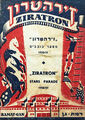
Ziratron Progam - 1950-51 Season (1950)
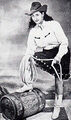
Zippora Zabbari (c.1950)
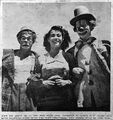
Muky & Alex with friend (1951)
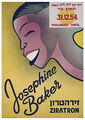
Josephine Baker at The Ziratron (1954)
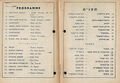
Ziratron program (1954)
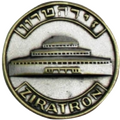
Ziratron souvenir pin (c.1955)
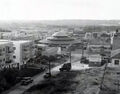
The Ziratron (1955)
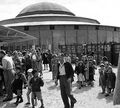
The Ziratron (1955)
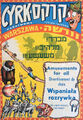
Polish State Circus Poster (1960)
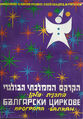
Bulgarian State Circus Program (1966)
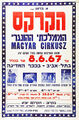
The Hungarian State Circus in Tel Aviv (1967)


.jpg)

